A new report released this week by The Rent Brigade documents one of the most devastating law enforcement failures in recent Los Angeles history. For people displaced by the Palisades fire, it confirms a painful truth about their own representation. This failure is not abstract or citywide in the general sense. It is concentrated in City Council District 11, represented by Traci Park, which was the city’s epicenter of the fire and one of the hardest-hit districts for illegal rent gouging in the year that followed. When her constituents needed protection most, their representative did not show up.
In the year after the Palisades and Eaton fires, landlords across Los Angeles illegally raised rents at massive scale. More than 18,000 rental listings were advertised at unlawful prices during a declared state of emergency. Tens of millions of dollars may have been illegally taken from tenants. Despite overwhelming evidence, widespread reporting, and months of public promises, almost none of it was stopped.
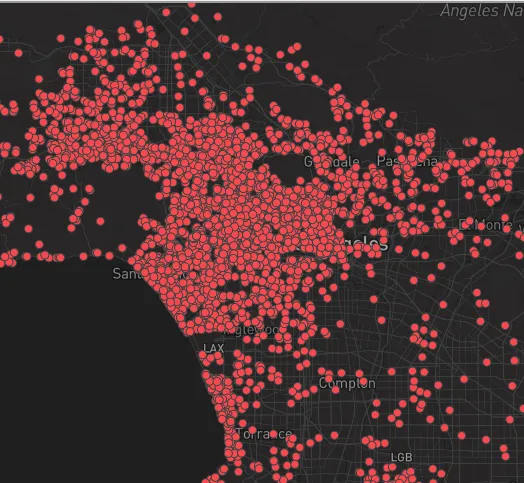
What this looked like in Traci Park’s own district is now unmistakable. In the year after the fires, at least 1,612 rent-gouged listings appeared in Council District 11 alone, representing roughly 15 percent of all rent-gouged listings citywide. These were not edge cases or anomalies. They were single-family homes, apartments, and townhomes openly advertised at illegal prices across Venice, the Palisades area, Marina del Rey, Brentwood, Westchester, and Del Rey. One out of every seven illegally rent-gouged listings in Los Angeles was located in Traci Park’s district.
And the scale of the overcharges was extreme. Many of these listings exceeded legal rent caps by thousands of dollars per month. Some exceeded them by tens of thousands. Homes were advertised at $20,000 to $30,000 per month above what the law allowed. These were not marginal violations or paperwork errors. They were massive, deliberate price hikes imposed on families who had just fled a disaster and had no meaningful alternative.
Many of the most egregious cases involved single-family homes and larger units, exactly the type of housing displaced families were forced to compete for after the fires. The market landlords targeted was the emergency market, and the profits reflected it.
This was not an abstract policy failure. It happened to people who fled a raging fire, lost their homes, and urgently needed somewhere to live. Families suddenly forced into the rental market assumed the law would be enforced. They assumed city and county officials would intervene when obvious crimes were happening in the open.
They were wrong.
What makes this failure especially reprehensible is how early and clearly it was documented. Widespread rent gouging was identified within days of the fires. Thousands of illegal listings were tracked publicly within weeks. Detailed evidence, spreadsheets, and tenant referrals were shared directly with enforcement agencies for months. Officials were not discovering the problem late. They knew exactly where it was happening, including in CD11. They were warned, and they chose not to act.
The report shows that enforcement collapsed at every level of government. Across Los Angeles County, only a handful of rent gouging cases were pursued in an entire year. Inside the City of Los Angeles, the City Attorney’s office recovered only a tiny fraction of what tenants were owed. No administrative fines were issued. Most landlords faced nothing more than warning letters while continuing to profit. As the report makes clear, there was no justification for sustained inaction.
Traci Park’s response amounted to symbolism without enforcement. City Council passed an ordinance expanding Los Angeles’ price-gouging law to cover housing and lodging, but it functioned as a shield, not a tool. There was no follow-through, no coordinated enforcement effort, and no meaningful use of the law once it took effect. Despite more than sixteen hundred documented instances of illegal rent increases in her own district, Park cited the existence of the ordinance as proof of action while rent gouging continued unabated around her constituents.
That pattern was visible even earlier. In February 2025, while displacement from the Palisades fire was still unfolding, the Los Angeles City Council considered a resolution supporting AB 246, a state bill written specifically in response to the fires to strengthen renter protections and prevent post-disaster rent gouging. Traci Park voted no. At the very moment stronger protections were being proposed for people facing wildfire displacement, Park sided with landlords and opposed the measure.
What emerged instead was a striking pattern of selective enforcement. After the fires, law enforcement and prosecutors moved quickly and visibly on looting and other low level property crimes. Those cases were treated as urgent threats to public safety and pursued aggressively. At the same time, rent gouging was effectively ignored, even though it was happening at vastly greater scale and causing far more financial harm to people who had just lost their homes.
This failure becomes even harder to reconcile in light of subsequent events. In July 2025, the Los Angeles City Attorney filed a lawsuit against Airbnb alleging that thousands of listings on the platform exceeded legal rent caps during the wildfire emergency. The lawsuit sought penalties and restitution for displaced tenants and acknowledged the scale of online listing-based gouging that had already been widely documented.
Yet just three months later, on October 23, 2025, Traci Park’s office solicited and executed a $570,000 donation from Airbnb routed to an immigrant nonprofit. The donation occurred while Airbnb was an active defendant in litigation over the very housing instability affecting Park’s constituents.
There is not yet any public evidence that enforcement decisions were influenced by this relationship. But the timeline underscores a stark political contradiction: while city attorneys were pursuing legal action against a company accused of worsening wildfire displacement, Park maintained financial ties to that same corporation and later positioned it as a partner in community support.
This contrast was not accidental. Traci Park has built her political brand around law and order, often using fear to frame street crime as the defining danger facing the Westside. In moments of crisis, that framing leans on familiar anxieties about disorder and who is seen as threatening. It elevates highly visible, low-level crime as the central public safety concern while downplaying or ignoring white-collar crimes committed by landlords and property owners. It draws attention toward the idea of outsiders coming into neighborhoods to steal, while directing almost no attention toward landlords who were quietly extracting millions of dollars from displaced residents behind closed doors.
The result was a profound imbalance. While isolated incidents of looting were treated as an emergency, widespread and well documented rent gouging was treated as a secondary issue or a messaging problem. The crimes that mattered most to people displaced by the fires were not prioritized. Emergency displacement created the conditions for exploitation at scale, and landlords in CD11 and across the Westside took full advantage.
As the councilmember whose constituents were most affected, Traci Park had ample opportunity to escalate when it became clear enforcement was failing. She did not publicly demand prosecutions, push for restitution, or apply sustained pressure on the agencies responsible. Instead, she allowed the existence of the ordinance itself to substitute for outcomes.
The new report confirms how hollow that approach was. Not a single tenant successfully relied on the ordinance over the following year. Private enforcement never materialized because people who had just lost their homes could not risk retaliation or legal conflict while dependent on their landlords for housing.
This failure cannot be separated from the officials Park chose to champion and protect.
At the city level, enforcement authority rested largely with City Attorney Hydee Feldstein Soto, a close political ally of Traci Park. Her office had jurisdiction over the majority of rent gouging violations in the city, but pursued only a handful of cases, relied heavily on warning letters, and recovered almost nothing for tenants.
At the county level, Park has been a vocal booster of District Attorney Nathan Hochman, promoting him as a tough “law and order” alternative to his predecessor, George Gascón. Hochman did not prosecute a single rent gouging case, even as tens of millions of dollars were illegally taken from people displaced by disaster. During the same period, other fire related crimes were pursued aggressively, reinforcing the sense that the law was applied selectively.
Money helps explain the pattern. Traci Park is the top recipient of campaign donations from rent gouging landlords in Los Angeles. City Attorney Hydee Feldstein-Soto is a close second. Hochman also received substantial landlord money and then declined to enforce the law against them.
Together, they tell a clear story. When people displaced by the Palisades fire were being openly overcharged, drained of savings, and forced to pay illegal rents just to stay housed, the officials charged with enforcing the law chose not to. They talked about accountability and order, but those promises disappeared when landlords were the ones breaking the law.